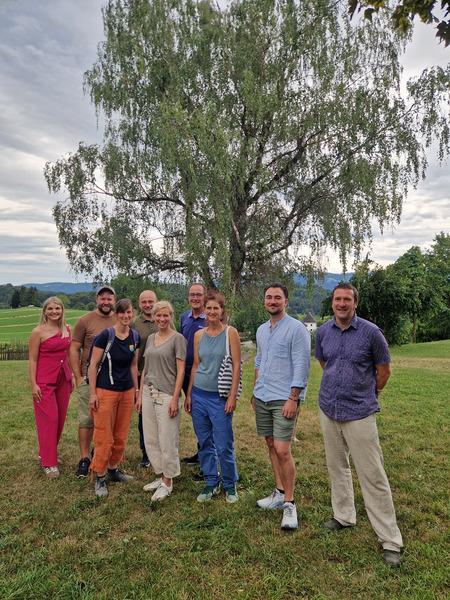
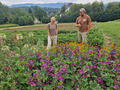
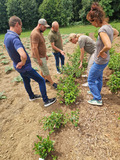
The EIP project is investigating which exotic crops can be successfully cultivated, harvested, processed and marketed in Austria. The project aims to develop practical cultivation and processing recommendations, enable the development of new marketable products, strengthen regional value creation and reduce dependence on imports.
Practice-oriented trials with specialty crops
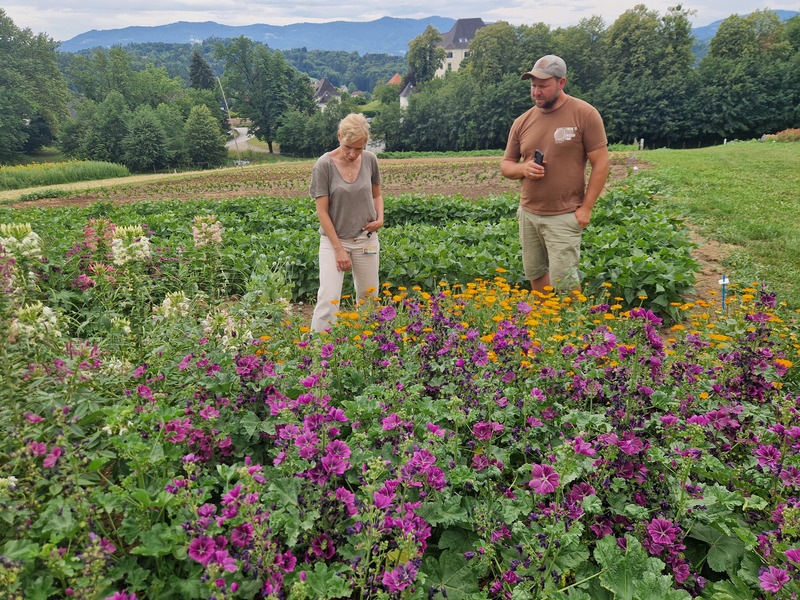
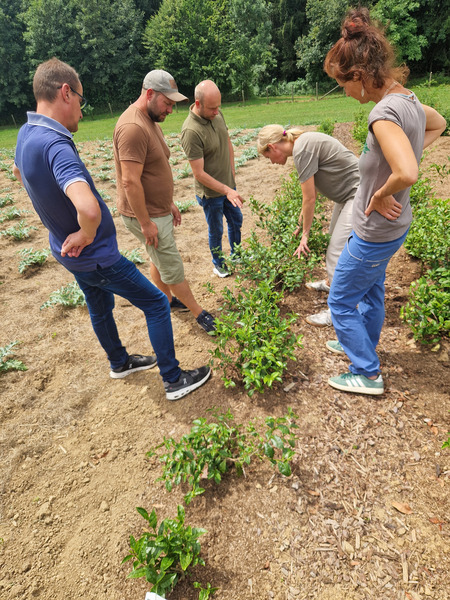
During the visit to the trial plots in Wies, crops such as bee balm, Greek mountain tea, artichokes, green tea, Sichuan pepper, Tasmanian pepper, rooibos, ginger and turmeric were discussed. The discussions showed that introducing new crops is not only a matter of cultivation techniques. Seed availability, germination capacity, site requirements, water demand, plant health, processing, shelf life and market potential are all equally important factors.
Several examples illustrate the complexity of such innovation processes.
Rooibos offers potential for new regional value chains, but its cultivation is currently constrained by limited seed availability and poor germination rates. Bee balm faces challenges related to powdery mildew and raises interesting questions regarding selection and further breeding. Green tea requires suitable soil conditions, sufficient water, and adapted crop management. Sichuan pepper shows promise under Austrian climatic conditions, but it has specific harvesting and handling requirements. New pests, such as the southern green stink bug, are also becoming increasingly relevant as they affect a wide range of plants and can damage herb crops. Trap crops and flower strips could be important components of adapted pest management strategies.
Practical insights from Himmelreich Kräuter
Following the project meeting, participants visited Himmelreich Kräuter. This family-run business has specialized in herbs and spice plants from around the world for three generations. The visit provided valuable insights into the farm's own plant production through sowing, division, and propagation from cuttings, as well as its specialization in rare herbs and useful plants. The company cultivates more than 1,000 different herb varieties.
Relevance for OH-FINE
For OH-FINE, the EIP project 'Exotic Austria' is a highly relevant practical example. It encompasses several of the project's core themes, including diversification in organic farming, farm-level innovation, specialty crops, regional value creation, and knowledge exchange between research, advisory services, and farming practice.
The issues discussed during the project meeting clearly demonstrate the importance of practice-oriented trials, farmers' experience and scientific support for the further development of organic farming. New crops in particular require adapted cultivation strategies, sound knowledge of site conditions and plant health, and realistic assessments of processing requirements, shelf life and market opportunities.
A possible next step is for FiBL to conduct a more detailed literature review on selected crops and unresolved technical questions. These findings could inform practical information materials, knowledge exchange formats or further OH-FINE activities.
We would like to thank all the partners of the 'Exotic Austria' operational group, especially the Wies research station, for their valuable insights and expert knowledge.
Further information
This event was organised by the EIP-AGRI Operational Group "Exotic Austria".
Contact
 tap and then scroll down to the Add to Home Screen command.