About the field demonstration
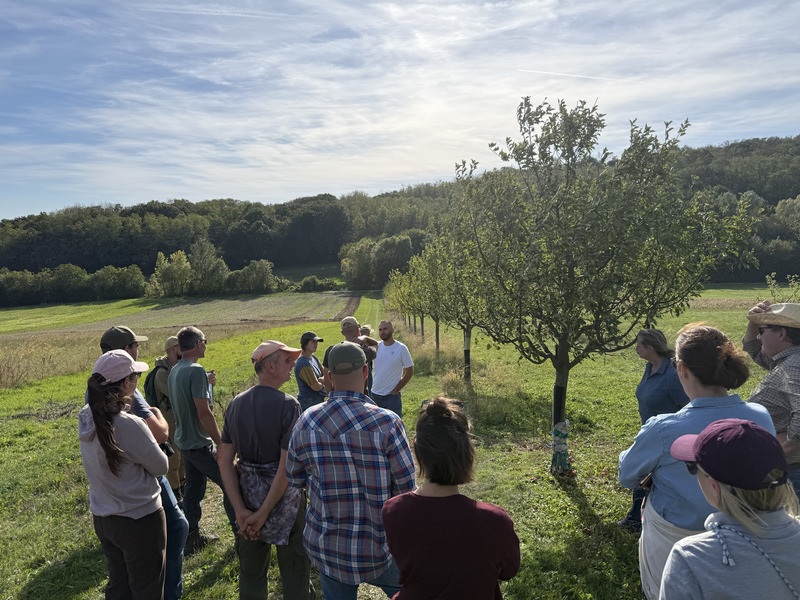
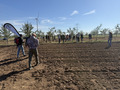
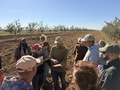
The demonstration focused on practical experiences with agroforestry systems that combine tree rows with arable production and livestock farming. Participants visited various farms and discussed how agroforestry can contribute to climate adaptation, biodiversity, and diversified agricultural production. They also explored the practical challenges involved in establishing and managing these systems.
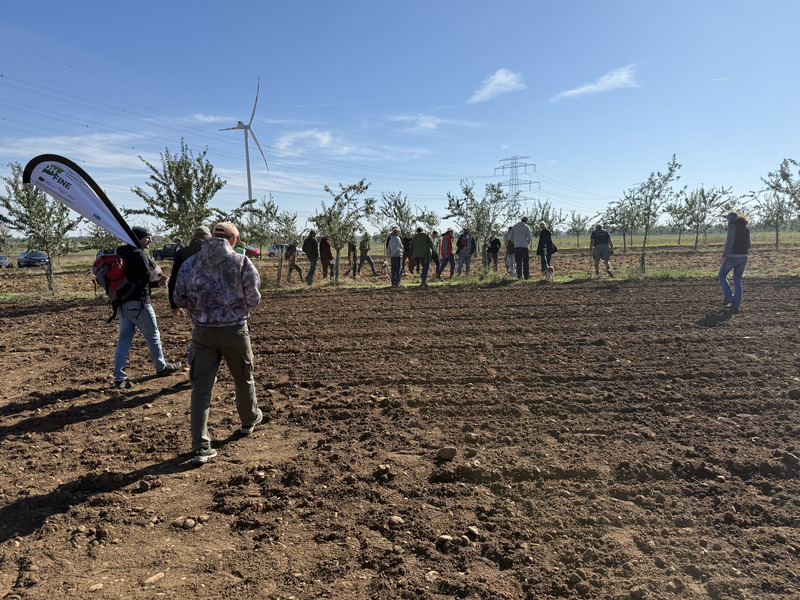
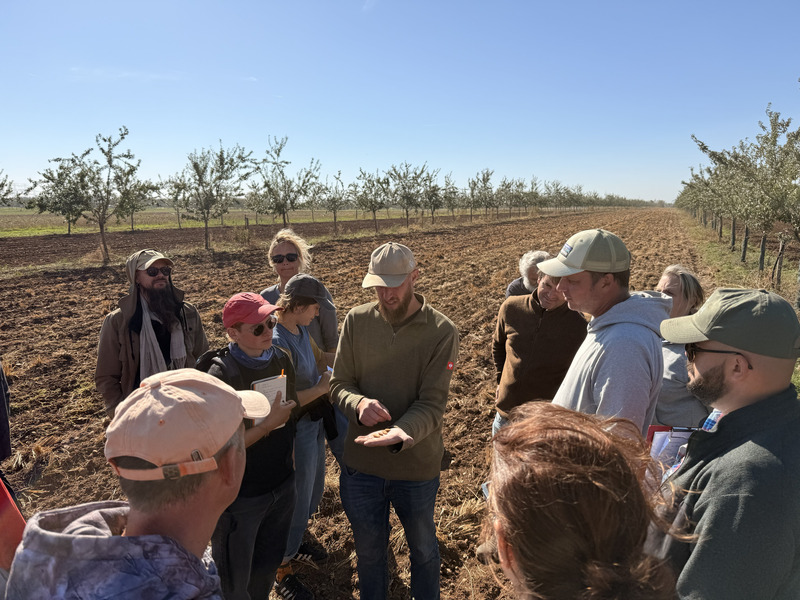
Particular focus was given to the OH-FINE on-farm trial at Biohof Ripfl, where over 800 almond trees have been integrated into an arable field. This trial investigates the influence of the tree rows on the microclimate of the adjacent cropping area. Measurements indicate clear differences between the agroforestry system and the open field, particularly with regard to wind speed, temperature, and vapour pressure deficit (VPD).
The tree rows reduced wind speed, with this effect varying depending on the wind direction. From May to June, the agroforestry system also exhibited lower maximum temperatures from morning until early afternoon, followed by slower cooling later in the day. High VPD values, which can contribute to plant stress and reduced photosynthetic activity, occurred less frequently during periods of high solar radiation.
The field demonstration provided an opportunity to discuss these findings directly in the field, comparing scientific observations with the practical experiences of farmers. These discussions also revealed that the advantages and disadvantages of agroforestry depend heavily on local conditions, system design and farm objectives.
By combining on-farm experimentation with knowledge exchange between farmers, advisors and researchers, the event showcased the OH-FINE approach to supporting the development and dissemination of practical knowledge for more resilient organic farming systems.
Further information and contact
For more information, please contact Friedrich Leitgeb.
 tap and then scroll down to the Add to Home Screen command.